We are a collection of Minneapolis folks cooking, preserving, and harvesting local, seasonal foods. This blog-share is meant to inspire greater culinary genius, as well as continued local food invention. What are YOU concocting in that kitchen of yours?
Showing posts with label liver. Show all posts

8.30.2022

Scrapple

Scrapple! How I have not thought to make this before is a wonder to me, as it combines all kinds of things I love - liver, bone broth, and I used wild rice along with cornmeal - all in a breakfast sausage/toast kind of thing. It is so good! Good enough to resurrect a blog post. Because of the collagen-y broth, this sets (and keeps) in the fridge, so you just slice off a piece and then fry it up.

I mostly followed Forager Chef's recipe, but Hank Shaw at Hunter, Angler, Gardener, Cook has a nice looking one for the more traditional pig head scrapple. I don't know if my farm could get me a pig head, but might be fun to try. Scrapple seems fairly flexible, and I almost always have liver and bone broth around, which makes this pretty easy. For this first attempt I used a pound of goat liver and 3 slices of bacon (because it is what I had in the fridge), though any bits of leftover meat would do. You could start the whole thing from scratch following their recipes if you have meaty bones/a pig head. 

Liver (or organ) Scrapple

  • 3-4 slices bacon
  • half small onion, diced
  • 16 oz lamb/goat/chicken livers (or a mix of livers/hearts/kidneys)
  • 4 c bone broth (you need the collagen!) 
  • 1 T salt
  • 1 c cornmeal (fine or course)
  • 1 c wild rice flour (ground wild rice)
  • 1/4 c buckwheat flour
  • 3/4 tsp pepper
  • 1/4 tsp allspice
  • 1/4 tsp nutmeg
  • 1/4 tsp cinnamon
  1. Prepare a loaf pan: I recommend using tin foil, parchment, or wax paper under/along the sides of a greased pan so that you can easily lift out the scrapple. Or, just grease the loaf pan and have at it. 
  2. Cook bacon slices and render out the fat. When bacon is done, brown the onions in said fat.
  3. In a food processor, process the liver (or offal) with bacon and onions and grind to a paste. (This is kind of weird b/c the offal is raw.) Put this mix into a small saucepan and cook for several minutes to sweat off the excess moisture. It will probably stick to the bottom of the pan, so stir as you go. 
  4. Whisk the flours and spices in a large bowl.
  5. In a large saucepan or pot, heat the bone broth and whisk in the flours. Keep whisking until it starts to thicken. Turn heat to low, and stir regularly for 15 minutes, then add the meat mix and cook another 30 minutes, stirring regularly so it does not stick OR put the whole thing in the loaf pan and cook in a 300 degree oven for 30 minutes. **I was too afraid of all the sticking, being as my mixture was so thick after 5 minutes with just the rice and cornmeal. So I added everything in then and there and stuck it all in the oven for 40 minutes. Alan Bergo says to bake it covered, but I found mine needed to be uncovered halfway through.
  6. When the scrapple is fairly solid and the cornmeal/wild rice is well cooked, "pour" (more like spoon) the mixture into the greased loaf pan. Chill the pan, uncovered on the counter until room temperature, then refrigerate, covered with plastic wrap, until completely set before slicing.

Serve with eggs and whatever you like. Many people eat this with maple syrup, a la bacon and pancakes. I thought it was delicious as a conduit for runny eggs.   


9.08.2020

Liver on Grits with Ginger-Onion Confit and Greens

I spent the long weekend camping and harvesting wild rice, at a very slow pace because I am new to the activity, with many a mishap along the way! (Beginning the first day when my friend and I decided to rice at a closer lake than our ricing companions were at, so we ventured out without their tutelage, and push poled from the stern of the boat, rather than the bow. Which is a less stable and much more awkward way to go! 😂) To be on a lake, poling through thick rice, is like nothing I have done before. I'll save my musings for a future rice post, but suffice to say I am sore and grateful to have spent the weekend outside surrounded by beauty as the weather turned cool overnight. My car died on the way home yesterday, making the day quite long. I had enough time to drape the wet tent inside (it was raining out), eat some eggs, and get into bed by 9pm. So tonight when I finished work early, I decided to have wine and make a fancy dinner. Which feels quite perfect on this cool day, where fall seems around the corner, if not here already.

My dinner is based on a recipe from Culture Eatz that I've had saved for awhile. It is originally for polenta, which is so much like grits that I honestly don't really know the difference. I also made some cooked greens to add to the dish, and bacon. Which made this already somewhat indulgent dish even more so!! It was aces. Creamy grits, liver, fancy confit, greens AND bacon?! I mean, what is not to like here. So if you have a little time (at least an hour), settle in and make this dinner. 

I followed the recipe below very closely except for making this grits recipe (where I used butter and some cream, but no cheese or wine), and I only had red wine for the confit, which makes it look kind of weird. Next time I would maybe just use a little apple cider vinegar instead to keep the pale color - the ginger was so nice in there! I also didn't want to use sugar in the confit, so I used a chopped up a date or two instead and added them with the wine. Finally, I did not dredge my liver in flour, and instead just fried it in butter. (I also converted her recipe to American measurements, except for the polenta items, which are in blue.)

I did bake some bacon in the oven to crumble on top, and I made a side of greens where I sauteed some onions in coconut oil, added some garlic once the onions were soft, and then a bunch of chopped kale. I sprinkled water in the pan, put a lid on it to steam the greens, and cooked until the greens were soft. I seasoned with smoky salt. 

Ingredients

  • 3/4 lb lamb (or calf) liver (I used chicken b/c that is what I had)
  • 1 large onion
  • 1.25 inch fresh ginger
  • 1/2 c white wine (I only had red)
  • 1/2 tsp thyme
  • 1 clove garlic
  • 250 ml milk
  • 100 g polenta (corn meal)
  • 25 g parmesan
  • 1 rhubarb stalk (or 30 sour cherries, 30 cranberries or a tart apple)
  • 4 sprigs sage
  • flour* opt
  • sugar* opt
  • pepper
  • salt
  • oil
  • butter

Instructions:

For the ginger-onion confit: Peel the onion and ginger. Cut into thin matchsticks. In a small pot put the onions and ginger with 2 tbsp water and a pinch of salt. Cook covered over a low heat until soft for about 30 minutes. You do not want it to brown. Add 100 ml of white wine, bring to a boil and lower heat to a simmer for 30 minutes uncovered, stirring regularly, or until almost all the liquid as evaporated. Season confit with a good pinch of salt and 2 tbsp of sugar. Mix well and set aside. Note: you can move on to the other components of this recipe when you start your 2nd simmer.

For the crispy sage: Pick 14 nice leaves from the sprigs. Heat a bit of oil in a pan, once the oil is hot fry the leaves until completely crispy but not too browned. They are ready when the leave have gone all dark green. Drain on paper towels and set aside. 

For the liver: Cut the liver into thin slices and season with salt and pepper. Heat 1 tbsp of butter in the same pan you fried the sage in. Drench the liver slices in flour and roast in the pan until cooked put still pink inside. Place the liver on an oven-safe plate and keep warm in the oven set at 160 F.

For the tart fruit: Cut rhubarb into slices and add it very shortly to the pan where the liver was roasted in. You just want to soften a bit, no more. Season with a pinch sugar, remove from the heat and set aside.

For the polenta: Place the crushed garlic and thyme in a cheesecloth and tie with string or a rubber band, cut of extra material. Bring 250 ml water, 250 ml milk, the remaining 50 ml white wine, the garlic and thyme package, and a large pinch of salt to a boil. Lower heat to low and discard the cheesecloth package. While stirring constantly and vigorously, add the polenta to the pot and cook until thickened. If the polenta is thick add more milk, you want a silky and malleable polenta. Add 1 tbsp butter and the grated parmesan and mix. Season with salt to taste. *Or make grits instead, which I find easier.

Assemble: Ladle polenta into two bowls (on top of greens, if using) and top with liver slices. Spoon onion confit on the liver, garnish with rhubarb and crispy sage (and bacon if using). Serve immediately while still warm. 

8.17.2020

Indian Liver Curry

My mom is staying with me following surgery where she needs to be on one level for bedroom/bathroom/kitchen access. All went well enough, but she has low hemoglobin. So liver seemed like a good idea. I flagged this recipe awhile back, and I had some lamb liver in the freezer. It turned out nicely, despite my lack of cilantro. The curry was really tasty, and the liver flavor to me seemed so unexpected in this context. I got the recipe from a food blogger doing a liver experiment (to cultivate a love for liver). She reports getting the recipe from the EasyFoodSmith blogger, whose food blog looks worth exploring. Of all my liver recipes, this is probably the fussiest, and the most aromatic. It was really good with rice.

Indian Liver Curry, 4 servings

  • 1 lb liver (lamb, mutton or calf)
  • 3-4 tbsp oil
  • 1/2 tsp garam masala
  • 2 large onions
  • 1 tsp generous ginger garlic paste
  • 1 large bay leaf
  • 1 inch cinnamon stick
  • 1/4 tsp ground cloves
  • 1/2 tsp cumin seeds
  • 2 tomatoes
  • salt to taste
  • 1 tsp coriander powder
  • 1/2 tsp red chili powder
  • 1 tsp turmeric powder
  • two green chillies, whole
  • rice
  • fresh cilantro
  1. Boil water and add diced (small size- an inch and a half to max two inch) liver. Cook for approx a minute and then drain water and wash with fresh water. Keep aside. *This is theoretically to decrease "liver taste" which I don't mind. Feel free to skip this step and just add liver to cook at the end if you are already a liver lover. :)
  2. Heat oil and the garam masala, it will become fragrant. Then add onions and fry till they become golden brown. Add half a cup of water, the ginger garlic paste, bay leaf, cinnamon, cloves and cumin seeds. Cook till water evaporates and the masala turns aromatic and somewhat brownish in color. Add tomatoes and salt to taste, coriander powder, red chili powder, turmeric powder, and cook til tomatoes become mushed and release oil at the edges of the masala.
  3. Add liver, two green chillies, whole, and water. Cook till liver is done (you want it just a little pink in the middle, which can happen quickly with these small pieces). Sprinkle a little garam masala once the curry is done and serve with rice or roti. Adjust the amount and thickness of curry by adding more water if required.

3.05.2020

Ethiopian spiced liver

I wanted to make liver for dinner, and decided to prepare it like I would Ethiopian tibs (my version, taught me by my friend, apparently they vary), which involves small, diced pieces of beef that are cooked well in spiced butter, with onions and jalapenos and spices. The beef pieces get all nice and charred and chewy. There is a common Ethiopian liver dish called dulet, which I have had once before, served mixed with (raw or cooked) beef in spiced butter and with mitmita spice, and (sometimes? always?) with tripe. This is not that. This is just regular cooked chicken liver, with Ethiopian spices.

It turned out amazing! I made it with some charred onions and peppers, and had Tikel Gomen, my go-to cabbage dish, along-side. Yum. I didn't actually measure out the spices, so this is my estimate. I like my chicken liver cooked sort of medium: browned on the outside, but soft and pinkish in the middle. That is what I did here, and all the spices fried up in the butter and made great little flavor bits.

Ethiopian Spiced Liver
glug of ghee/butter/olive oil
1 red onion, roughly chopped in wedges
1 green pepper, roughly chopped
1 lb chicken livers
1 T Ethiopian cardamom*
1/4 tsp mitmita spice (or less as preferred; it's spicy)
2 T niter kibbeh (spiced ghee)
1/2 tsp pepper
1 tsp salt
1 small jalepeno, diced small
*Ethiopian cardamom is more coarsely ground, and is also called "false cardamom" or "Korarima." It is a black cardamom from the ginger family, not the smaller green pods of Indian cardamom. I have a supply of the stuff from Ethiopia, but you can also buy it at Shega Foods, along with mitmita spice mix, which is spicy! So use it mindfully. (One site I found says if you do not have Ethiopian false cardamom, use regular cardamom and add a touch of nutmeg, cloves, and black pepper.)

1) Heat regular butter/ghee or olive oil in a small/med cast iron pan on med-high heat. Add the onions and saute for a few minutes to soften and separate the wedges into pieces. Add green peppers and saute another couple of minutes. *I then put the pan under the broiler, stirring every so often to turn the veggies over and get an even better char. You could also continue on the stove.
2) Heat a medium-large cast iron pan on medium heat, and add the niter kibbeh. When it is melted, add the liver pieces in one layer. Brown on one side for 3-4 minutes, and then flip. They will likely spatter some, so I used a mesh grease guard thing. (Or you could do what I did not, which is to dry the liver pieces a bit so they are less wet.)
3) Sprinkle spices over all of the pieces of liver so each piece gets a bit of everything. Especially make sure to distribute the cardamom evenly. Add the jalapeno and fry it along with the liver.
4) Continue stirring several more minutes. You are cooking the liver so it gets browned and coated in spices and butter, flipping or stirring as needed until it is to your liking. Mine probably cook for a total of 7-8 minutes.

Serve the liver with the now charred onions and peppers, and any scraped up bits from the pan (primarily cardamom and spiced butter). This would all be tasty with injera too, if you have some on hand!

3.19.2014

Braunshweiger

In my last 2-4 trips up north I have checked out the local butchers and meat counters for Braunshweiger - a German liverwurst that seems popular in the northern part of the state. All of the versions I have encountered include corn syrup, which I seem to react to, so I have been unable to actually consume any. But then I got a copy of an amazing cookbook from the library: The New Midwestern Table. The cookbook is a lovely homage to midwest cooking, and includes numerous (non-paleo) delights like Michigan pasties, jello salads and an entire section of potatoes and onions. She also has recipes for wild rice/manoomin, deviled eggs (that she heats at the end?!), beet pickled eggs, cucumber salads, and pickled fish. She runs the gamut of Scandinavian, German, and Russian (Nebraskan Runza's - which are bread pies filled with meat) and they all seem to be really good looking recipes.

And - she has a recipe for Braunshweiger! With no corn syrup (or any sweetener for that matter). I followed her recipe pretty precisely, except for leaving out the garlic (I seem allergic), swapping vermouth for sherry, and using just a bit more liver than she calls for. Traditional Braunshweiger seems to be about 40% pork liver, and her recipe is only about 20%. I happened to have 3/4 pound of liver and used it all (bringing the liver total to 25%). It is important that you have fresh liver, because it gets bitter as it ages by the day. I bought frozen pork liver from the Seward, which is frozen fresh and was very easy. I just defrosted it in the fridge the day before.

I actually did not grow up eating braunshweiger, but in my recent fandom of liver in every variety, (and pork belly), I was fairly convinced that I would like this. It turned out great. I didn't wait for it to chill all the way before digging in, and it was more pate-like. But once it thoroughly chilled, it was like the braunshweiger of my imagination where you could cut slices. I ate mine on paleo crackers with some dijon mustard. Yum.

Homemade Braunshweiger
Based on the recipe from The New Midwestern Table
2 tsp fine sea salt
2 tsp freshly ground pepper
1 1/2 pounds fatty pork (I used half pork belly, half pork shoulder)
8 oz slab bacon (I used regular bacon)
12 oz fresh pork liver
1 T pork fat or ghee
2 T salted butter
1 large onion, diced
4 cloves garlic, sliced (I didn't use these!)
6 T dry sherry or vermouth
1/2 c heavy cream
1 tsp grated nutmeg
2 tsp dried marjoram
1/2 tsp ground allspice
Pinch of cayenne pepper
1/3 c shelled pistachios (or pecans or walnuts)
Dijon mustard (for serving)

1. Combine the salt and pepper in a small dish.
2. Cut the pork and bacon into 1" cubes and put them in a wide bottomed 2 quart pot. (The pot should fit the meat in one layer, although a little double up is okay.) Add water just to cover and 3/4 tsp of the salt/pepper mix and bring to a simmer. Cover, reduce the heat, and cook at a slow bubbling simmer until the meat is very tender when poked with a fork, about 3 hours. *I was leaving the house, so did this step all in a crock pot on high heat for 4 hours. It worked great.
3. Uncover and drain, reserving 3/4 c of the mixed juices and fat. Cover the meat and chill. *I had A LOT of juices/fat left, which will make great soup stock. I did reduce the liquid a bit by simmering it on the stove for 30 min or so. It wouldn't be necessary, but I wanted to get extra flavor in there. It still left me with an extra 2 c or so of soup stock.
4. Meanwhile, prepare the liver. Rinse the liver and blot it dry on an old dish towel or paper towels. Cut into 1" cubes (mine from the Seward was already chopped that way?!). Heat a large cast iron skillet over med-high heat and add 1 T pork fat/ghee. Season liver with a bit of the salt/pepper mixture. When the fat is hot, add the liver and sear on all sides until browned on the outside, but pink inside - about 5 minutes. Transfer the liver to a wide bowl.
5. Add the butter and diced onion to the skillet. Season with more of the salt/pepper mixture and cook over medium heat until the onions are sweet, golden, and tender - about 20 minutes. Add the garlic slices (if using) and cook another few minutes until softened. Add the sherry and simmer until it is reduced and "clings saucily to the onions." (I found this descriptor totally accurate and compelling! It did cling saucily!) Add the cream and simmer until thickened, about 3 minutes. Pour the onion mixture over the liver in the bowl, cover and chill in the fridge until very cold.

*I did the previous steps one day, and just chilled everything together in a big bowl overnight. The next stage is to grind and process the meat. She uses a grinder attachment on her stand mixer - but I don't have a stand mixer, so did everything in batches in my food processor. The goal is to really grind the ingredients to a paste - however you do that - and almost "whip" in some liquid. The food processor worked great - it's just that the mixture is quite thick and paste-like and gets a bit sticky.I use that method below.

6. Preheat the oven to 325 degrees.
7. To remaining salt/pepper mixture, add nutmeg, marjoram, allspice, and cayenne.
8. Grind/process the meat in 3 batches in a food processor, drizzling part of the reserved liquid and part of the spice mixture into each batch. As you process each batch, empty the paste-like product to a large bowl. Once all of the meat is processed and paste-like, but also a bit fluffy from the processing - mix it all together to incorporate all of the flavors. I used a big wooden spoon, but you could also use a hand mixer. Taste the mix (I ate mine as is - it is all cooked - but you could also fry a little up) and adjust salt and pepper as desired. I needed to add another teaspoon or so of salt.
9. Scoop the mixture into a lightly buttered glass or metal 9 x 4" loaf pan. Smooth the top and press nuts into the surface. Set the loaf pan in a larger baking pan and pour hot water into it to reach halfway up the sides of the loaf pan, making a water bath. Bake until the internal temp reaches 150 degrees, about 50 minutes. Remove from the oven and cool to room temperature. Then unmold the loaf, wrap in plastic wrap, and chill deeply.


*Mine did not "unmold" super easily - I went a little too early while it was still warm. I sort of reformed it back, but was nervous it would not hold its shape as it chilled on the front porch. It mostly did. I ended up cutting it in half and just wrapping up half in parchment paper.

2.05.2014

Crispy chicken livers

It's February! And there is so much snow everywhere! I've been getting a little more use of my snowshoes with all this snow. I also have been cooking lots of familiar (aka already posted) recipes and simple dishes that really are not so stellar in the blog posting world - stew, meat with roasted or sauteed veggies, carrot porridge, and more pork belly. I had a phone call with my homeopath a few weeks ago, and she was asking me about any food cravings. I told her really the main thing was fat and pork belly. : )

I did also try a new liver recipe from my now-returned-to-the-library copy of Well Fed 2. It's an interesting one because you soak the livers in some coconut milk, then coat them in a mix of spices, coconut flour, and arrowroot powder to fry. They turned out delicious, but I had some difficulty with the coconut milk/flour combo. It's like the coconut milk absorbed the flour, and then fell off the livers, which were then barely coated in the flour mix. (I still fried up some of the floury bits and they were really good!) SO I don't know if I need to really let the livers drip off coconut milk, or maybe my coconut milk was a little too thick? I might try this recipe again and just eliminate the coconut milk step all together. The spices in the flour mix were really, really good - a Moroccan flavored blend with some heat from the cayenne. I ate them with fresh mint, which was really nice. Fresh mint this time of year feels a bit novel - and not local. Maybe I could try growing it in a pot inside?

1 lb chicken livers
1/2 c coconut milk
1/3 c coconut flour
2 T arrowroot powder
2 tsp paprika
2 tsp coarse garlic powder
1/2 T cumin
2 tsp salt
1/2 tsp pepper
1/2 tsp cloves
1/8 tsp cayenne
2-4 T coconut oil (I used pork belly fat/lard which gets things extra crispy!)
lemon/herbs to garnish (parsley, cilantro, mint)

1. Cut livers into 2" pieces. Marinate in coconut milk for 10 minutes.
2. In shallow bowl, combine flour, arrowroot, and spices. But flour mix in a baggie with drained livers, and shake to coat. *This is where mine got a little messy - the coconut milk clumped in the flour.
3. Heat oil/fat in a large skillet on med-high. Once it is hot, add livers in a single layer and cook for 3-5 minutes on each side until brown and crispy. This will take 2-3 batches to fry all livers - add more fat as needed because they soak it up!
4. Serve with fresh herbs and/or some fresh lemon juice sprinkled on top. I ate this with a chilled Moroccan carrot salad, and the two were great together (i love that salad!)

11.12.2013

Chicken Hearts and Livers (Del va Jegar)

Del va Jegar is a Persian dish of Chicken hearts and livers. I came across it in my "Great Liver Recipe Search" across different cultural cuisines. I have never had chicken heart before, but they sell it at the Seward Co-op, so I felt inspired to give it a try. The little hearts are a a nice chewy texture that contrasts really nicely with the creaminess of the liver. I thought it turned out great - the flavor combo was like no other I have had before. It uses fresh and sun-dried tomatoes, saffron, garlic, and some cumin. Minimal spicing. There is not a specific recipe on the internet that I could find, but I did watch this lovely video of chef KShar. I recommend reading the comments, especially his responses: KShar seems to radiate love and joyfulness, which I find very enjoyable.

I modified the recipe to be paleo, which really meant using coconut flour in lieu of bread crumbs. I also estimated the amounts of ingredients I used (he does not give amounts) - but since I have never had this dish before, I have no way to know if my amounts are correct or not. Someday maybe I will get to have this dish and compare! It seems that many Iranian people traditionally make this with lamb liver and heart, which might be another interesting experiment.

Del va Jegar
You can't see the tomato slices, but they are under there!
1/2 lb. chicken hearts, cut in half
1/2 lb. chicken livers, cut in half
coconut flour (2-3 T)
1/4 c. fat
2-3 cloves garlic, minced (opt)
1 tsp red pepper flakes
1/4 c. chopped green onion
1/4 c. sundried tomatoes, chopped
pinch cumin
pinch saffron
1-2 tomatoes, cut in thick slices
Garnish: julienne green onion and cilantro
(or parsley in my case because it was in the garden!)

1. Put 2 T fat in a medium sized skillet or cast iron pan. Fry garlic on medium heat. After a few minutes, add red pepper flakes and onion. Saute several minutes. Add sun-dried tomatoes and saute another few minutes. Mixture should be fragrant and soft looking. Add hearts and continue cooking on medium, stirring occasionally.

Floured livers (left) and hearts (right)
2. Meanwhile, heat remaining 2 T fat in a large cast iron skillet. While it is heating, roll or toss liver pieces in coconut flour to coat. Ideally this will be a light dusting. When fat is hot, lay liver peices on a single layer across the pan and turn the heat to medium/medium-high. You want to be careful not to overcook the liver, and you also want a nice browned sear. This will be about 3-4 minutes on each side. They will still be pink in the middle, and I always think, "they can't be done yet!" but they are. You want them creamy and soft, and the less you handle them the better.

3. Add spices to the heart mix: salt and pepper, cumin, and saffron and continue to stir.

4. When liver is done, remove it from the skillet and set on a warm plate. Keep the skillet heat on, and now layer the slices of tomato in the skillet to brown in the remaining coconut-flour-y fat. Sprinkle a bit more coconut flour on top, and flip them after a minute. The tomatoes should get a nice sear.

5. To serve: lay tomato slices on each plate. Cover with heart mixture (it should pile up a bit). Cover that with pieces of liver. Sprinkle with julienned green onion and cilantro and serve!

9.05.2013

Venison Liver with Onions, Bacon, and Sage

After a year of some concerted effort to eat more of it, I have come to enjoy and savor the flavor of liver. Eating liver makes me feel happy and nourished, like I am being good to my body. I love when I cook it just right and it tastes perfectly tender. This recipe is my current fave - using whatever kind of liver (venison, chicken, calf, lamb) - especially now when there is abundant fresh sage. I did try this with beef liver too - and it was still pretty good, but you know, liver-y. The venison livers I have are often from younger deer, so they resemble calf more than full grown beef. Beef livers are a bit full flavored. Whichever liver, I have finally learned to cook it well, which is to say, I have learned not to over-cook it. As Jennifer McLagan writes in Odd Bits, "Seared crisp on the outside and meltingly tender on the inside, enriched with butter and spread on toast or quickly grilled with a warm and creamy center - well prepared liver is sublime." Yes. Sublime. 


This recipe (originally for calf's liver) is from Odd Bits, a cookbook I am hoping to explore more this winter. It is a cookbook full of recipes to cook the "odd" parts of an animal: tongue, sweetbreads, brain and tripe - among MANY others. I am currently happy in the liver section, whose introduction asserts that every cuisine has a liver specialty. I have looked up some of the ones she mentions, plus a few others to return to for liver inspiration later:  
Dulet Photo
The last one is the one I am most intrigued by, at least at this moment. I have not found a recipe, but the link above likens the dulet to kitfo, which I may have mentioned once or 1000 times that I LOVE, and in fact the author of the link prefers the dulet. I did find that Dilla's on the west bank in Minneapolis serves Dulet (neither Fasika or Blue Nile do), so maybe it is worth venturing there. In the meanwhile, I will enjoy this liver and onions take on things (modified slightly from Odd Bits):

Venison Liver with Onions, Bacon, and Sage
Serves 2
2 thick slices bacon, double smoked if possible
1/4 c duck fat (I used butter)
3 onions, halved and thinly sliced
Coarse sea salt and freshly ground pepper
16 sage leaves, finely shredded
9 oz liver (or more!)
coconut flour
1+ T sherry vinegar

1. Cut the bacon into 1/4 inch strips. Heat half the fat in a frying pan over medium heat and add the bacon and onions. Season with salt and pepper and cook, stirring often, until the onions are softened and colored, then stir in the sage and keep warm in a 200 degree oven. *For best results and added fussiness, also put two dinner plates in the oven to warm.
2. Dust the liver slices lightly with coconut flour (you don't need much) and season with salt and pepper. In another frying pan, just big enough to hold the liver slices, heat the remaining fat over high heat. When the fat is hot, add the liver and cook until you see beads of blood on the top surface of the liver, 45 seconds to 1 minute, turn and cook on the other side for about 30 seconds, or until you again see beads of blood form. Transfer the liver to (warm) plates.
3. Add vinegar to the pan, stir to deglaze, scraping up the browned bits, and then add the pan juices to the onion mixture. Top the liver with onion mixture (or as in my photo, top onions with liver) and serve.

5.31.2013

Beef Liver....that I actually want to eat

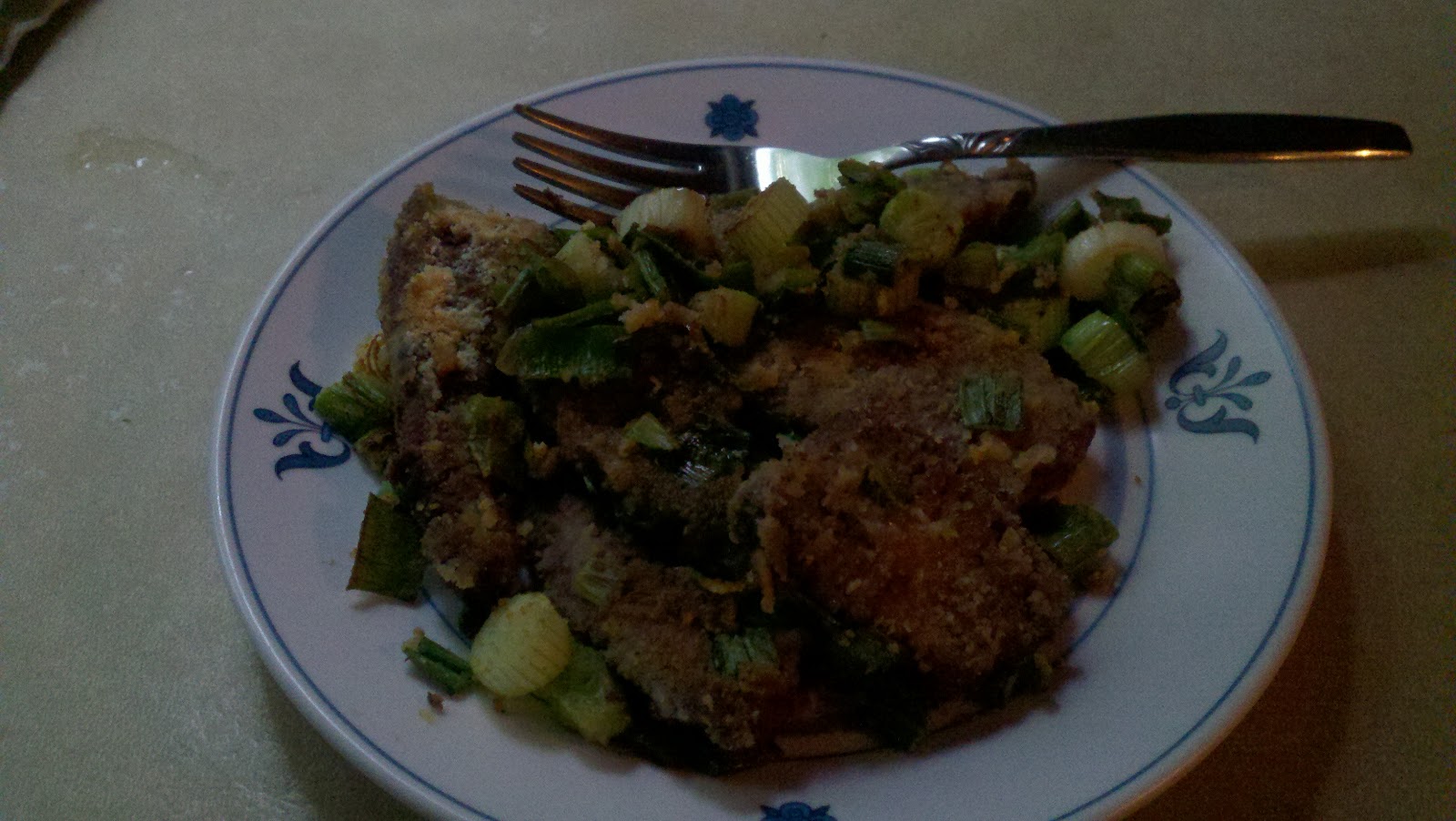
Yes, I have finally found a recipe for beef liver that I enjoy eating.  I tried many versions and finally put together this easy little combo of ingredients.  I was determined to eat, and to like, beef liver because it is so healthy and full of so many wonderful vitamins and nutrients.  Here is a link to an informative page on  Chris Kressor's website about the benefits of eating organ meats.  He even goes over common misconceptions about liver, such as, the notion that it stores toxins.  I didn't think that people actually believed this until last week when I was talking with my Aunt about liver and she expressed this same concern.  It felt really good to be able to share my knowledge about this important food and maybe encourage her to try incorporating it into their diet.  It can be tricky to share food knowledge while not offending the other person, so I don't do it that often.  But when I can and the other person is receptive it is really gratifying.

Anyway, back to the beef liver.  It's a really simple recipe and only takes about 10-15 minutes to prepare.  I usually plan to cook my main dinner in the oven, and once I get it in there and going, I make the liver as a kind of appetizer.
Beef liver with green onions- it's good, I swear

Ingredients:
2-3 ounces beef liver
1 Tbsp butter or ghee
1-2 stalks of green onion
1 Tbsp coconut flour
1 tsp garlic powder
salt and pepper to taste
1 lemon wedge

Directions:
Rinse the liver under the faucet, cut into chunks, squeeze the lemon over the top to marinate for a few minutes, and set aside.  Heat a skillet on medium heat while you chop the green onion and mix the coconut flour, garlic powder, salt and pepper together on a small plate.  Melt the butter in the pan and add the green onion.  Dredge the liver in the flour mixture and add to pan.  Cook on each side for about 2 minutes.  Add butter if necessary.  The liver will get a slight golden crust on them.

The ingredients mask the livery flavor while adding a taste of spring.

Enjoy in good health!

5.17.2013

Scrambled eggs with chicken livers

More liver! This was a total trial of something new, and I thought it was really good. I am finally learning how not to overcook liver - they are really tender and so delicious when they are cooked on the more medium rare side so that the center is still pink. Putting them in this egg dish makes it easy because you have small pieces and you just cook them for a a few minutes with the eggs. The result is a creamy, soft egg and liver combo that is surprisingly good. I was inspired about it from a lovely article in the NY Times that made me think "that sounds super delicious!" even though it also sounded a bit strange.

The original recipe calls for vermouth - which is a dry wine that is flavored with herbs. I didn't have any, so just used a dry white wine. I made this for lunch, and also used cream in lieu of the parmesan cheese. This dish will be really nice when some fresh herbs come in: sage or fresh thyme!


Scrambled Eggs with Chicken Livers
3 tablespoons fat (I used ghee, but coconut oil, bacon fat, or olive oil would work) 
1/2 medium onion, sliced
5 eggs
1/4 c heavy cream
Salt and pepper to taste
6 fresh sage leaves, or a teaspoon minced rosemary or thyme
4 chicken livers, cut into pieces
1/4 cup dry wine (or dry vermouth)
1 T olive oil for garnish
Parsley, chopped for garnish
1. Put 3 tablespoons of the oil in a medium skillet over medium-high heat; a minute later, add the onion and cook, stirring, until it begins to brown, about 5 minutes. Meanwhile, beat the eggs with the cream and some salt and pepper.
2. Add the herbs and livers to the onion and cook, stirring occasionally, until pink, about 2-3 minutes. Pour in the eggs and vermouth and stir until the eggs set, a minute or so. Garnish with the remaining olive oil and parsley and serve hot, warm, or at room temperature.

4.29.2013

Rumaki

I made some super delicious rumaki last weekend. Yum. This is an amazing appetizer/pre-dinner - or even straight up dinner if you want to go for that much bacon and liver! Plus, it is very 1950's should you be going to some kind of theme party...throw in some deviled eggs and you are all set.

I have had rumaki without marinading the liver and I think it tastes just fine. I don't know if the marinade made it extra good this time, but it definitely tasted better. This is also the first time I used water chestnuts, so do what you will. I keep trying to think up something a bit more local and tasty in place of the water chestnuts...radish slices are my best thought so far. I'll let you know how that goes. I also wanted a little more ginger. Next time I will put a little fresh ginger in each rumaki (in addition to the marinade).

Rumaki
5 pieces bacon, halved cross-wise
10 water chestnuts
just under 1/2 lb chicken livers, cut in half (you want about 10 pieces total)
2 T coconut aminos
1 tsp freshly grated ginger

1. Marinate livers in coconut aminos and ginger for 30 minutes-2 hours.
2. Pre-cook bacon in a 400 degree oven. Lay bacon slices in a cookie sheet or cake pan with an edge. Cook for about 10 minutes, until cooked but not crisp. Pour bacon fat off of pan and let bacon sit until cool enough to touch.
3. Lay the chicken liver and a water chestnut in the center of a bacon slice. Add a little fresh ginger if you want, and wrap bacon around filling and secure with a toothpick before placing back on bacon pan. Continue with remaining ingredients until you have 10 bacon wrapped livers.
4. Bake in oven until bacon is crisp and golden, about 7-9 minutes. Serve!

4.22.2013

Liver! (of a lamb in this case)

Well, another 4-8 inches of snow tonight and I think that puts us very solidly in the "most snow in April ever" category. I was super happy to come from work tonight to meatloaf in the crockpot (all ready to eat!) and some mashed cauliflower (had to make that, but it was worth it for the total comfort food extravaganza). The forecast says 60 degrees on Friday, so, I venture to say this is the last of the snow.

I got taken out to fancy dinner last night, and after laboring and laboring over the decision about where, I finally opted for Sea Change, the sustainable seafood restaurant in the Guthrie. I wanted oysters and some culinary fancy schmantz, and definitely got that. Now I am in love with raw oysters and am on a mission to learn how to shuck them myself. They have lots of omega 3s, and more zinc than any other food (zinc helps protect against UV radiation among lots of other great things). Oysters also seem to be one of the only kinds of seafood that are best to get farmed as opposed to wild; though Seafood Watch currently has both farm and wild rated as "Best Choice." So, I will be perusing some oyster shucking youtube videos in the coming weeks...hopefully to learn and master some kind of technique!

In the meantime, I am trying to eat liver every week or so to get all the amazing nutrients. Last week I saw that the Seward carries Lamb livers, and decided to give them a try. I thought they were good, though I over cooked mine a little. They actually don't need much time - so it might be worthwhile to actually set a timer so that they stay tender.

Lamb (or beef or venison) Liver
1/2 pound liver
2 T coconut flour
3 T coconut oil/lard/bacon fat
onions
bacon

You want your liver about 1/2" - 3/4" thick, so depending on how it comes to you, you may need to slice the liver lengthwise down the center so it isn't too thick. Mine was on the thicker side, but in 4 easy slices, so I just kept them that way.

I like to eat the liver with some onions and bacon, so prepare those however you want: I prefer cooking bacon in the oven, and caramelizing onion slices, but you could also chop up the bacon and cook it and the onions all together.

Liver is not so photogenic as it is good for you. Alas.
For the liver: heat the fat in a cast iron skillet on medium heat. While it is heating, coat your liver pieces in coconut flour. This is easiest done by shaking the liver in a baggie with the flour to get everything nicely coated. When the oil in the pan is hot, lay liver pieces flat (or flat-ish). Cook for about 90 seconds - 2 minutes a side, and sprinkle with salt and pepper while on the 2nd side. *This is worth setting a timer for! It will taste way better when not over-cooked, I promise.

Serve liver with onions and bacon, or just one or the other. Depending on how much liver you can eat, this will serve one or two!

3.05.2013

Beef Liver Meatballs

I am always looking for new ways to incorporate organ meats into my diet, and these meatballs are a new addition that I like.  The liver taste is covered up fairly well by the ground beef and spices.  The more spice the better.

I took inspiration from a few different paleo recipes, specifically this one from primal palate.com.  I love the cilantro, it really adds a fresh and zesty element to the dish.  I paired them here with roasted carrots, but I really love to eat them with sautéed spinach.  You can wrap each meatball in a big piece of spinach and that helps to cut the liver flavor even a bit more.

Ingredients:
beef liver, chopped
ground beef
onion, chopped
cilantro, chopped
sea salt
pepper
garlic powder
cumin
paprika

Combine all ingredients in a bowl.  Form with a spoon or fork and drop into a roasting pan.  Roast at 350 for 20-25 minutes, flipping halfway through.

Enjoy your dose of vitamin A!

12.20.2012

Deer Offal

I have been meaning to write for some time about my appreciation for roadkill deer (and also for My Charming Companion who it seems cannot leave the twin cities metro without coming across one). Now seems to be a nice time - stemming from an amazing dinner last weekend that came to being entirely because there was very little defrosted meat, but there was a fresh deer.  Though the deer still needed to be butchered, the organs were out and ready to go - hence an amazing meal of offal (organ meat) plus a wee bit of kebab.

Offal seems to be pretty popular among foodies and paleo folk (at least according to my internet perusing), but I am still in the experimental phase of offal-eating. Other than occasional chicken liver (in the form of pate), I've only tried a bit of venison brain and eaten heart ground up with burger meat.


Last weekend, though, I had offal trifecta: deer brain, liver, and lung. It felt really fancy - like I should also have been having some bone marrow or something served at some expensive restaurant in a city larger than Minneapolis. The whole meal was delicious, beginning with fried brain and fried liver and bacon, and then a creamy soup of lung and mushrooms, followed by the mini kebabs. (It felt a little like Fogo de Chao gone wild...haha!)

Brain is super delicate - and it is pretty difficult to remove (so I hear, I have not attempted this yet). To prepare it, poach the brain first. Dry it off, then dust it in flour before frying it in coconut oil. It turns out coconut flour does not crisp up in this scenario. It certainly isn't bad, but a GF flour mix, or rice flour will give you the crispy texture on the outside, whereas the coconut flour is more of a "coating" of browned flour. The brain is really tasty - it has a very soft texture, and tastes creamy.

The liver was sliced and tossed in a bit of coconut flour, which worked great here. The slices were fried and then served with bacon pieces - and this was DELICIOUS, probably due to the young tender fawn that the liver came from. Really. I may have shied away from deer liver before, but no more.

Finally the lung. I had never really thought of lung as edible before, but nothing surprises me much anymore. (My Charming Companion is anxiously awaiting enough deer testicles to comprise a serving portion. If testicles, why not lung?!) The lung was much more reddish and red-meat looking than I thought. I imagined it to be pale for some reason. The lungs need to get pounded to remove all the air pockets, and also require some trimming of the trachea and some bigger air vessels. Once that is done, the lung gets poached, and then it is ready to add to whatever dish. We had it in a soup that was chicken stock, portobella mushrooms, some wine, and cream. And a little lemon and salt and pepper. The lung tastes remarkably like a denser mushroom, and it was nice in the soup.

And I guess that doesn't leave much else for deer offal. Kidneys (I have not tried them yet), and the aforementioned testicles...hmmm.

*I realize that I don't give you enough information here to actually make these dishes (or about how to extract them, etc), so if you want to know that, you will have to call My Charming Companion to walk you through it.

4.23.2012

Liver Pate

Lest your first instinct be "Ew...liver?!" - I will say up front that I had my own doubts. I mean, who eats liver these days? My grandma - maybe. After eating this pate, I will no longer speak ill of this organ meat. And it turns out that liver is SUPER good for you, like crazy amounts of vitamin A and B12, and boosts for energy and brain power and all kinds of good stuff. The link with the recipe actually lists the vitamins in just 1 oz. of liver - and there is another linked page here with 10 Top Health Benefits. I've also been reading this book called Anticancer, which I am finding very interesting because of the ways that it talks about low stress and change of diet (change of lifestyle kinds of things) as having profound effects on how our bodies deal with cancer. I'm feeling amazed by food lately - how changing how we eat can do such drastic benefit to our health.

So - back to pate. According to the author of the recipe, it is important that the liver you get be organic or grass fed. I tried this pate twice: first with Kadejan chicken livers from the Wedge ($1.99/lb) and next with Callister chicken livers from the Seward ($4.99/lb). According to the recipe link, the color of organic vs. pasture raised chicken livers is noticeable, but I found both sets of livers to be pretty similar.

The pate made a great lunch with carrots and celery and cucumber - or it would be good on crackers, or whatever. The only note I have for the recipe is that it takes quite some time to cook off the liquids after you add them, so be prepared. Otherwise this recipe is super simple and easy. Also, I think the pate is way better made with wine than with vinegar (but perhaps this is obvious).